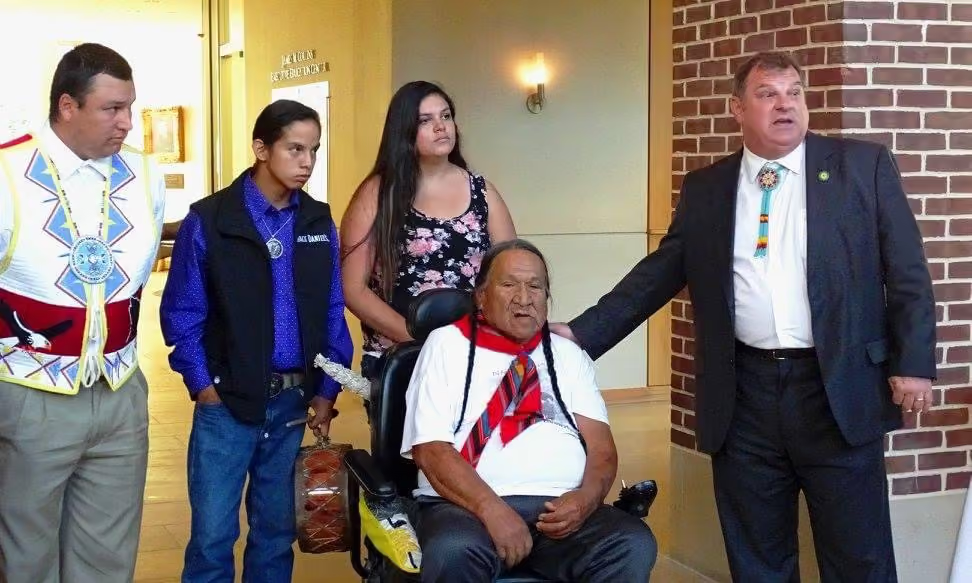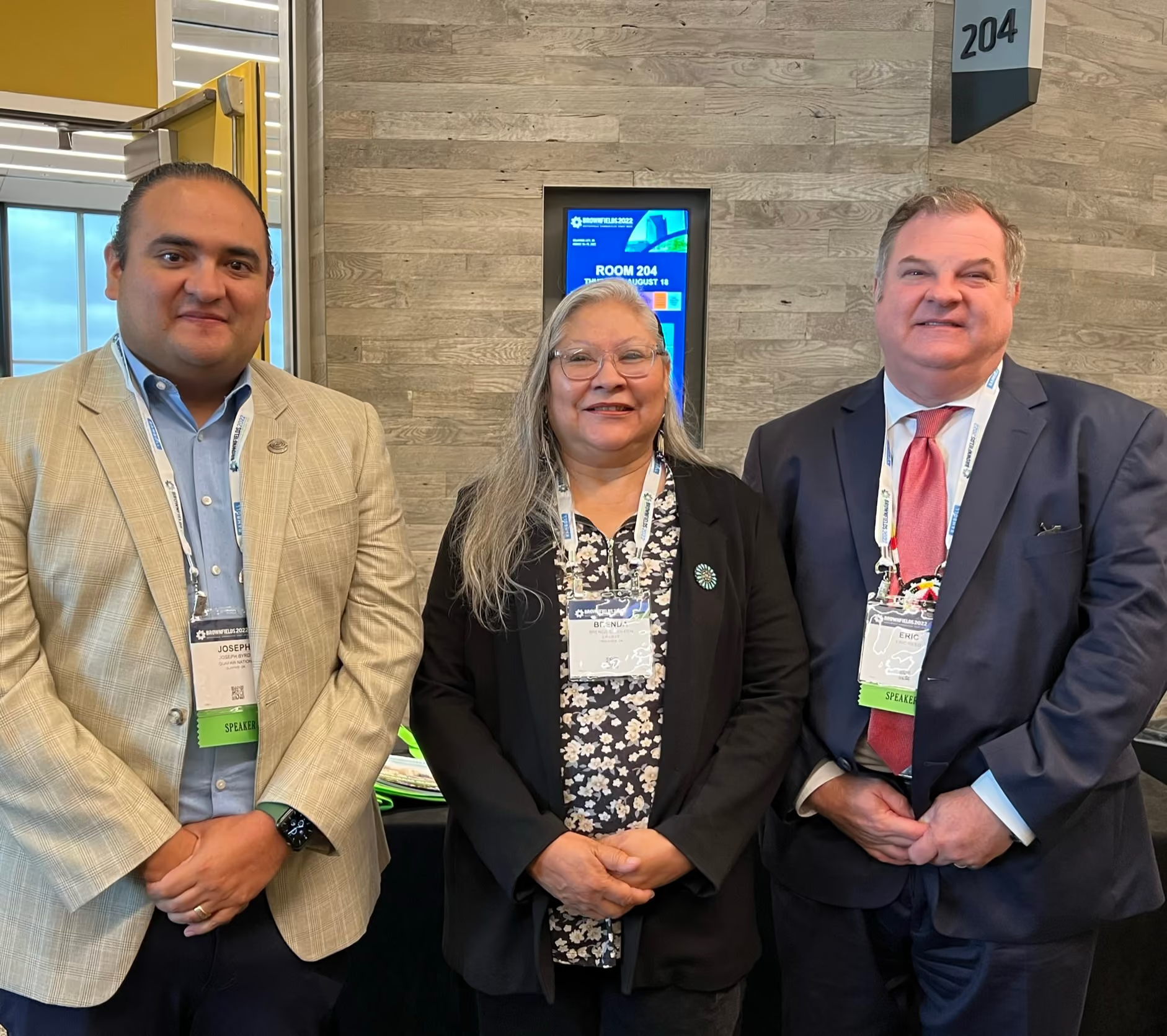




Eric Reed has spent his career on both sides of the courtroom.
Why Eric is running
As in all democracies, Dallas voters deserve the opportunity to have more than one choice at the ballot box. After decades in the justice system, Eric believes Dallas County needs leadership that understands both the authority of the District Attorney’s Office and the responsibility that accompanies it.
He isn’t asking voters to trust a campaign slogan. He’s asking them to look at a career spent doing the work and decide whether that experience is what Dallas needs in its District Attorney.

The long version
Eric Reed is a trial attorney, former prosecutor and longtime Dallas lawyer who has spent more than three decades working on both sides of the criminal justice system. He has prosecuted cases, defended people accused of crimes, represented tribal governments, advised businesses and nonprofits, and litigated in state, federal, tribal and military courts.
That experience has given Eric a perspective few candidates for District Attorney can offer. He understands the responsibility that comes with the office and what that looks like from the other side of the courtroom, where a person’s freedom, family and future can depend on a prosecutor’s judgment.
Eric began his legal career in the early 1990s, working as a clinical prosecutor with the Bernalillo County District Attorney’s Office in New Mexico and as a student prosecutor for Laguna Pueblo and Isleta Pueblo. He later served as a Special Prosecutor with the United States Attorney’s Office for the District of South Dakota for the Cheyenne River Sioux Tribe.
In 1996, Eric joined the Dallas County District Attorney’s Office Trial Unit as an Assistant District Attorney. Later, he opened his own law practice, where he has continued to represent clients for three decades.
His practice has taken him into some of the most demanding areas of law, including criminal trial and appellate work, federal litigation, American Indian and tribal law, environmental law, corporate matters and international Indigenous rights. His work has brought him into nationally significant legal matters involving tribal sovereignty, environmental justice and the rights of Indigenous peoples.
For more than 15 years, Eric also taught at the University of Texas at Dallas, where he lectured on criminal law, federal prosecutions, organized crime, constitutional rights, international law, tribal sovereignty and law enforcement. He has continued teaching lawyers and legal professionals through continuing legal education programs throughout Texas.
His commitment to the legal profession has included leadership of the State Bar of Texas Native American Law Section, which he chaired for multiple terms, as well as service with the Dallas Bar Association, Texas Indian Bar Association and Texas Criminal Defense Lawyers Association.
An eighth generation Texan and enrolled citizen of the Choctaw Nation of Oklahoma, Eric earned undergraduate degrees in Economics and Finance and Anthropology from Southern Methodist University. He earned his law degree from the University of Iowa College of Law, where he was a fellow to Professors Robert N. Clinton and S. James Anaya.